Here's about Martelo kicks.
A Martelo is a type of kick as practiced in Capoeira. The martelo, which literally means "hammer" can be described as a roundhouse kick. In generic terms, it is a strike with the instep, the lower part of the shin, or the shin itself, against the opponent's body; the most common being the temple of the head. The most common forms of the Martelo include:
* Martelo-em-Pé
This is the most common martelo seen in Regional/Contemporânea rodas. There are many ways of beginning the kick. Capoeira's emphasis on utilizing a kick from anywhere at anytime can have the martelo begin with rear leg rising up as the knee is driven up and forward. Other ways can be from the ginga or jumping from the rear leg and turning the front leg into the kicking one. The martelo em pé has the kicking leg rising with the knee and turning inward toward the kicking surface. The leg is this snapped towards the head and returned back to the knee returning to the ground. Emphasis is placed on speed and deception rather than knockout. Even with this precaution knockouts can and will occur due to the weight and sheer force of the leg.
* Martelo-do-Chão
Martelo from the Floor. It can be delivered upward from a lower position usually right before a rolé while in esquiva baixa or downward going into a queda de rins. With one hand on the ground the capoeirista lifts his kicking leg up spinning it towards the other player. Has the look of a meia lua de compasso in reverse.
* Martelo Rotado
A spinning martelo. It resembles the Teh Tud of Muay Thai more because it is usually delivered from the back leg with the thigh and foot facing inward before they are fully extended. Control is sacrificed for power and speed as the leg does not stop, but follows through in a full rotation of the hips.
Showing posts with label capoeira kicks. Show all posts
Showing posts with label capoeira kicks. Show all posts
Wednesday, March 30, 2011

Tuesday, March 29, 2011
Capoeira Kicks : Chapa (sha-pa)
Below about the Chapa (sha-pa).
The chapa is a generic name for a range of kicks using the flat bottom of the foot. Generally a chapa, as I’ve learned it, has the player pivot like a martelo, but push out with their foot like a benção.
Chapa, the sole of the foot, is a generic term for various straight kicks with the sole or heel of the foot. This kick can be used in a roda to push away the other player for distance. These include:
* Chapa-de-Costas
It resembles a kick from a horse or mule in which both hands are usually on the ground while one of the legs is pushed outward towards the other player. It is a clever attack that can be delivered out of a role towards the groin or knee of the other player.
* Chapa-de-Frente
A straight kick facing the opponent sometimes performed from a Queda de Quatro, pushing with the hips to gain greater extension. It has the look of a Bençao given from a Queda de Quatro.
* Pisào
Another variation being a side kick. First the player begins by lifting the knee of the kicking leg and hip level of the support leg. The capoeirista turns his supporting foot 180 degrees to the rear while thrusting the kicking foot towards the other player's body.
* Chapa Baixa
This is a side kick to the lower areas including the thigh, knee, or instep. Impact is usually made with the heel or sole of the foot. As with the pisào, the chapa baixa begins with a forward knee raise. However, instead of rising upwards towards the usual kicking targets capoeira(head, chest, stomach), the kick is driven downward towards the other player's lower extremities. It incorporates the malacia in capoeira appearing as a high kick but ending in an unpredictable painful kick to the knee or thigh. In most rodas this is shown rather than completed to full extension. During the later rounds of his title defense in UFC 97 with Thales Leites, Anderson Silva made extensive use of this technique.
* Chapa Giratoria
Capoeira’s answer for the reverse side kick. It is done is the same way as ban dae yeop chagi in TKD with the capoeirista stepping forward or diagonally while turning his torso. At the same time he raises his back leg up, unleashing it at the apex of the turn in a straight path.
[edit] Chapéu-de-Couro
"Leather hat" is a squatting planted roundhouse kick. The arch of the foot taps the partner's exposed head in the spirit of a "tag, you're it" or "watch your head" move.
The chapa is a generic name for a range of kicks using the flat bottom of the foot. Generally a chapa, as I’ve learned it, has the player pivot like a martelo, but push out with their foot like a benção.
Chapa, the sole of the foot, is a generic term for various straight kicks with the sole or heel of the foot. This kick can be used in a roda to push away the other player for distance. These include:
* Chapa-de-Costas
It resembles a kick from a horse or mule in which both hands are usually on the ground while one of the legs is pushed outward towards the other player. It is a clever attack that can be delivered out of a role towards the groin or knee of the other player.
* Chapa-de-Frente
A straight kick facing the opponent sometimes performed from a Queda de Quatro, pushing with the hips to gain greater extension. It has the look of a Bençao given from a Queda de Quatro.
* Pisào
Another variation being a side kick. First the player begins by lifting the knee of the kicking leg and hip level of the support leg. The capoeirista turns his supporting foot 180 degrees to the rear while thrusting the kicking foot towards the other player's body.
* Chapa Baixa
This is a side kick to the lower areas including the thigh, knee, or instep. Impact is usually made with the heel or sole of the foot. As with the pisào, the chapa baixa begins with a forward knee raise. However, instead of rising upwards towards the usual kicking targets capoeira(head, chest, stomach), the kick is driven downward towards the other player's lower extremities. It incorporates the malacia in capoeira appearing as a high kick but ending in an unpredictable painful kick to the knee or thigh. In most rodas this is shown rather than completed to full extension. During the later rounds of his title defense in UFC 97 with Thales Leites, Anderson Silva made extensive use of this technique.
* Chapa Giratoria
Capoeira’s answer for the reverse side kick. It is done is the same way as ban dae yeop chagi in TKD with the capoeirista stepping forward or diagonally while turning his torso. At the same time he raises his back leg up, unleashing it at the apex of the turn in a straight path.
[edit] Chapéu-de-Couro
"Leather hat" is a squatting planted roundhouse kick. The arch of the foot taps the partner's exposed head in the spirit of a "tag, you're it" or "watch your head" move.
Wednesday, March 23, 2011
Capoeira Kicks : Benção
Below about Benção.
This literally means ‘blessing’, but getting one doesn’t feel like it...
The kick is aimed at the chest and it is normally used to push the opponent back. For a tall person like me, it’s useful for attacking while keeping my distance.
The Benção is a blow to poultry which aims to set up the abdomen of the opponent, whose leg is stretched behind the swing to straight ahead in order to push or move and not hit the opponent (as some groups do).
The "blessing" was spoken by blacks as a "blessing to. "
This can be traumatizing blow (hit) or destabilizing (push). Depending on the teacher it varies between one or the other. In some cases they are taught the two possibilities.
This literally means ‘blessing’, but getting one doesn’t feel like it...
The kick is aimed at the chest and it is normally used to push the opponent back. For a tall person like me, it’s useful for attacking while keeping my distance.
The Benção is a blow to poultry which aims to set up the abdomen of the opponent, whose leg is stretched behind the swing to straight ahead in order to push or move and not hit the opponent (as some groups do).
The "blessing" was spoken by blacks as a "blessing to. "
This can be traumatizing blow (hit) or destabilizing (push). Depending on the teacher it varies between one or the other. In some cases they are taught the two possibilities.
Monday, March 21, 2011
Meia Lua de Frente Kicks
Below the technique of Capoeira kicks.
The Meia Lua de Frente (may·loo·ah gee french) is the most basic circular kick in Capoeira. From a neutral stance just kick your foot up and around toward the opponent.
Meia Lua de frente is a powerful capoeira kick done to the front from a variety of opening moves. The kick gets its name from the half circle drawn by the kicking keg.
The leg moves in a big half circle from the outside to the centerline. The arms usually move in the opposite direction to balance the movement of the kicking leg. The kick can basically start with entrada or without any preparation, from ginga.
The Meia Lua de Frente (may·loo·ah gee french) is the most basic circular kick in Capoeira. From a neutral stance just kick your foot up and around toward the opponent.
Meia Lua de frente is a powerful capoeira kick done to the front from a variety of opening moves. The kick gets its name from the half circle drawn by the kicking keg.
The leg moves in a big half circle from the outside to the centerline. The arms usually move in the opposite direction to balance the movement of the kicking leg. The kick can basically start with entrada or without any preparation, from ginga.
Friday, March 18, 2011
Capoeira Kicks : Chapa
Here's about Chapa kicks.
Chapa, the sole of the foot, is a generic term for various straight kicks with the sole or heel of the foot. This kick can be used in a roda to push away the other player for distance. These include:
* Chapa-de-Costas
It resembles a kick from a horse or mule in which both hands are usually on the ground while one of the legs is pushed outward towards the other player. It is a clever attack that can be delivered out of a role towards the groin or knee of the other player.
* Chapa-de-Frente
A straight kick facing the opponent sometimes performed from a Queda de Quatro, pushing with the hips to gain greater extension. It has the look of a Bençao given from a Queda de Quatro.
* Pisào
Another variation being a side kick. First the player begins by lifting the knee of the kicking leg and hip level of the support leg. The capoeirista turns his supporting foot 180 degrees to the rear while thrusting the kicking foot towards the other player's body.
* Chapa Baixa
This is a side kick to the lower areas including the thigh, knee, or instep. Impact is usually made with the heel or sole of the foot. As with the pisào, the chapa baixa begins with a forward knee raise. However, instead of rising upwards towards the usual kicking targets capoeira(head, chest, stomach), the kick is driven downward towards the other player's lower extremities. It incorporates the malacia in capoeira appearing as a high kick but ending in an unpredictable painful kick to the knee or thigh. In most rodas this is shown rather than completed to full extension. During the later rounds of his title defense in UFC 97 with Thales Leites, Anderson Silva made extensive use of this technique.
* Chapa Giratoria
Capoeira’s answer for the reverse side kick. It is done is the same way as ban dae yeop chagi in TKD with the capoeirista stepping forward or diagonally while turning his torso. At the same time he raises his back leg up, unleashing it at the apex of the turn in a straight path.
Chapa, the sole of the foot, is a generic term for various straight kicks with the sole or heel of the foot. This kick can be used in a roda to push away the other player for distance. These include:
* Chapa-de-Costas
It resembles a kick from a horse or mule in which both hands are usually on the ground while one of the legs is pushed outward towards the other player. It is a clever attack that can be delivered out of a role towards the groin or knee of the other player.
* Chapa-de-Frente
A straight kick facing the opponent sometimes performed from a Queda de Quatro, pushing with the hips to gain greater extension. It has the look of a Bençao given from a Queda de Quatro.
* Pisào
Another variation being a side kick. First the player begins by lifting the knee of the kicking leg and hip level of the support leg. The capoeirista turns his supporting foot 180 degrees to the rear while thrusting the kicking foot towards the other player's body.
* Chapa Baixa
This is a side kick to the lower areas including the thigh, knee, or instep. Impact is usually made with the heel or sole of the foot. As with the pisào, the chapa baixa begins with a forward knee raise. However, instead of rising upwards towards the usual kicking targets capoeira(head, chest, stomach), the kick is driven downward towards the other player's lower extremities. It incorporates the malacia in capoeira appearing as a high kick but ending in an unpredictable painful kick to the knee or thigh. In most rodas this is shown rather than completed to full extension. During the later rounds of his title defense in UFC 97 with Thales Leites, Anderson Silva made extensive use of this technique.
* Chapa Giratoria
Capoeira’s answer for the reverse side kick. It is done is the same way as ban dae yeop chagi in TKD with the capoeirista stepping forward or diagonally while turning his torso. At the same time he raises his back leg up, unleashing it at the apex of the turn in a straight path.
Thursday, March 17, 2011
Capoeira Kicks : Armada
Today's about Capoeira kicks name Armada.
An armada can be either a Rabo-de-Arraia without the hands supporting on the floor (the head falls below the waist and the kick is executed with the heel), or a Meia lua de Costas (halfmoon from the back), a spinning kick with the body upright. However the general meaning of this technique is a spinning inside to outside crescent kick.
The striking surface is usually the outside blade of the kicking foot. A queixada and armada are executed in exactly the same way with the exception of the armada beginning with a step to the right or left before releasing the kick. The power of the armada actually comes from the torque placed on the hips from the spin.
After stepping across the body (to the right or left) at around 45 degrees, the hips are spun while the arms are up to protect from punches or other kicks. Once there is enough torque, the kicking leg is "released" rather than kicked. This leg goes around in the same motion as a queixada until the kicking leg has finished its arc all the way back or parallel to the other foot.
* Armada Pulada
An Armada that is released after a jump. The armada pulada begins the same way as the regular armada with the capoeirista turing to the left or right. Once the head, neck and shoulders rotate towards the front, he/she jumps during the release of the armada making it a spinning aerial kick.
* Armada Dupla
Also known as an Envergado. A Grupo Capoeira Brasil player coincidentally known as Envergado is said to have invented this very move. The distinguishing feature of this move is the fact that both legs remain together during the take off, execution, and landing. Its name, Armada dupla, is derived from this feature and also literally means "double armada". After the take off, the torso stays upright and vertical, but will begin to quickly torque in order to swing the legs around and upwards. At the peak of this move, the body is in the shape of a "V". The legs continue to swing over as the body straightens out for the landing. In tricking, this move is called a Double Leg. Along with the Meia Lua Compasso and Au Malandro/Batida, the armada dupla one of the trademark kicks unique to the art capoeira.
* Armada com Martelo
The armada com martelo is a spinning double kick beginning with an armada pulada and finishing with a martelo. The capoeirista begins with the same motion of the Armada. While the first leg is raised up, he/she jumps off their back leg. Once the first leg completes its arc, the leg that was jumped off of comes around in the form of a jumping martelo rotado.
An armada can be either a Rabo-de-Arraia without the hands supporting on the floor (the head falls below the waist and the kick is executed with the heel), or a Meia lua de Costas (halfmoon from the back), a spinning kick with the body upright. However the general meaning of this technique is a spinning inside to outside crescent kick.
The striking surface is usually the outside blade of the kicking foot. A queixada and armada are executed in exactly the same way with the exception of the armada beginning with a step to the right or left before releasing the kick. The power of the armada actually comes from the torque placed on the hips from the spin.
After stepping across the body (to the right or left) at around 45 degrees, the hips are spun while the arms are up to protect from punches or other kicks. Once there is enough torque, the kicking leg is "released" rather than kicked. This leg goes around in the same motion as a queixada until the kicking leg has finished its arc all the way back or parallel to the other foot.
* Armada Pulada
An Armada that is released after a jump. The armada pulada begins the same way as the regular armada with the capoeirista turing to the left or right. Once the head, neck and shoulders rotate towards the front, he/she jumps during the release of the armada making it a spinning aerial kick.
* Armada Dupla
Also known as an Envergado. A Grupo Capoeira Brasil player coincidentally known as Envergado is said to have invented this very move. The distinguishing feature of this move is the fact that both legs remain together during the take off, execution, and landing. Its name, Armada dupla, is derived from this feature and also literally means "double armada". After the take off, the torso stays upright and vertical, but will begin to quickly torque in order to swing the legs around and upwards. At the peak of this move, the body is in the shape of a "V". The legs continue to swing over as the body straightens out for the landing. In tricking, this move is called a Double Leg. Along with the Meia Lua Compasso and Au Malandro/Batida, the armada dupla one of the trademark kicks unique to the art capoeira.
* Armada com Martelo
The armada com martelo is a spinning double kick beginning with an armada pulada and finishing with a martelo. The capoeirista begins with the same motion of the Armada. While the first leg is raised up, he/she jumps off their back leg. Once the first leg completes its arc, the leg that was jumped off of comes around in the form of a jumping martelo rotado.
Sunday, February 6, 2011
Learn Capoeira Kicks
Learn Capoeira Kicks.
Capoeira is a martial art and had so many attacks. Fuck Capone formed the majority of the legacy of the attacks.
However, these attacks simply by using inheritance. They are also used for defense while playing in a roda strategic.
I have some important information about their basic kicks and I will present the following..
Straight Kicks
Generally, I’ve learned that most capoeira kicks can be divided into two categories, straight and spinning. The following are straight kicks. They are thrown directly towards the other player and don’t really travel like spinning kicks do. Here are some of the most common ones.
Ponteria (pon-tear-a)
This is a straight forward kick where the player kicks their leg straight up towards the opponent. In training we use it a lot for stretching out the leg to increase its range.
Watch video for Ponteria.
Source from thislink.
Capoeira is a martial art and had so many attacks. Fuck Capone formed the majority of the legacy of the attacks.
However, these attacks simply by using inheritance. They are also used for defense while playing in a roda strategic.
I have some important information about their basic kicks and I will present the following..
Straight Kicks
Generally, I’ve learned that most capoeira kicks can be divided into two categories, straight and spinning. The following are straight kicks. They are thrown directly towards the other player and don’t really travel like spinning kicks do. Here are some of the most common ones.
Ponteria (pon-tear-a)
This is a straight forward kick where the player kicks their leg straight up towards the opponent. In training we use it a lot for stretching out the leg to increase its range.
Watch video for Ponteria.
Source from thislink.
Thursday, October 21, 2010
Monday, October 11, 2010
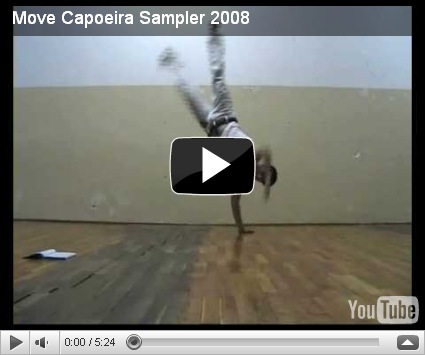
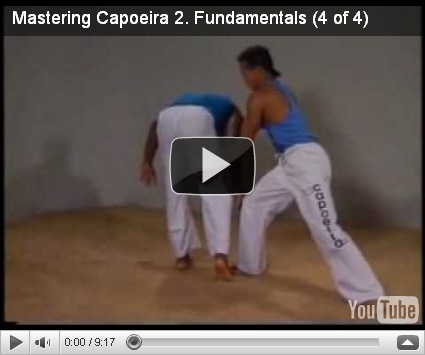
Mastering Capoeira
Want mastering Capoeira? Then you should watch this video. Read, click and try product from the bottom of this blog under sponsor links. Hope you like it.
Saturday, October 9, 2010


Thursday, July 23, 2009
Ginga Capoeira technique
Above about Ginga in Capoeira.
This movement, pronounced 'jinga', is probably the most important part of Capoeira. From this dance like movement the capoeirista is in constant movement and can flow from attack to defense with little thought. The ginga controls the capoeiristas' movement and timing. Only through practice can one truely master the ginga. The ginga differs slightly according to whether you are playing Angola or Regional. In Angola the ginga is very free and upto the individual, where as in Regional the movement is much more structured.
Wednesday, July 22, 2009
Strategy add kicks to defenses in Capoeira
Here are tip to defenses in Capoeira.
-
Step 1
Set yourself in an opening stance. Place your legs shoulder-width apart with one in front of the other.
-
Step 2
Perform an Armada or standard kick. Quickly spin your body around 360 degrees while lifting your back leg and extending it for the kick. Shift your weight as you turn. Keep your front foot on the floor. Continue the rotation and then place your back foot on the floor. You land sideways with your feet shoulder-width apart.
-
Step 3
Use the Meia Lua de Frente as a defensive attack. Lift your back leg waist-high. Swing it around 180 degrees. Hold your arms out to balance yourself during the move. Pull your leg back in to get into position.
-
Step 4
Do a straight kick or Bênção. Bend your knees and lift your front leg waist-high. Lean forward with both hands and grab the opponent. Straighten your lifted leg out slowly and firmly kick the opponent.
-
Step 5
Utilize the Meia Lua de Compasso or Rabo de Arraia in a defensive attack. Start in a basic stance. Step back with one foot. Bend forward and place your hands on the floor. Push off with your back leg. Kick that leg to waist-height. Spin your body around with the kick and land on your back foot.
-
Step 6
Perform the Negativa or takedown. Allow your partner to kick low. Lift your knee up to your waist. Extend your lifted leg. When your partner kicks, defend yourself with a kick to her chest. This knocks her down and gives you the advantage.
Monday, June 22, 2009
Make the good kicks
Here's tip on how make a good kicks.
You need to work on the conditioning, strengthening and flexibility in the legs and body, as well as the aerobic cardiovascular work-out. If you have a typical class, you generally do this for a while before you actually do any techniques. I think we used to do 45 minutes of warm-up before we started ginga.
You need to work on the conditioning, strengthening and flexibility in the legs and body, as well as the aerobic cardiovascular work-out. If you have a typical class, you generally do this for a while before you actually do any techniques. I think we used to do 45 minutes of warm-up before we started ginga.
Of course you also need to practice each kick. The more you practice the better you will be and straighter. Higher will depend a lot on your flexibility.
Subscribe to:
Posts (Atom)
